DICOMet is software for managing the flow of DICOM images and HL7 messages between imaging systems and downstream destinations.
It enables rule-based routing, optional data transformation, and visibility into routing activity through a web-based interface. Deployments may include PACS, VNAs, cloud storage, or integration pipelines.
A set of components for receiving, transforming, and delivering DICOM studies across your environment.
A Rust implementation with an async architecture intended to support concurrent connections and background job processing.
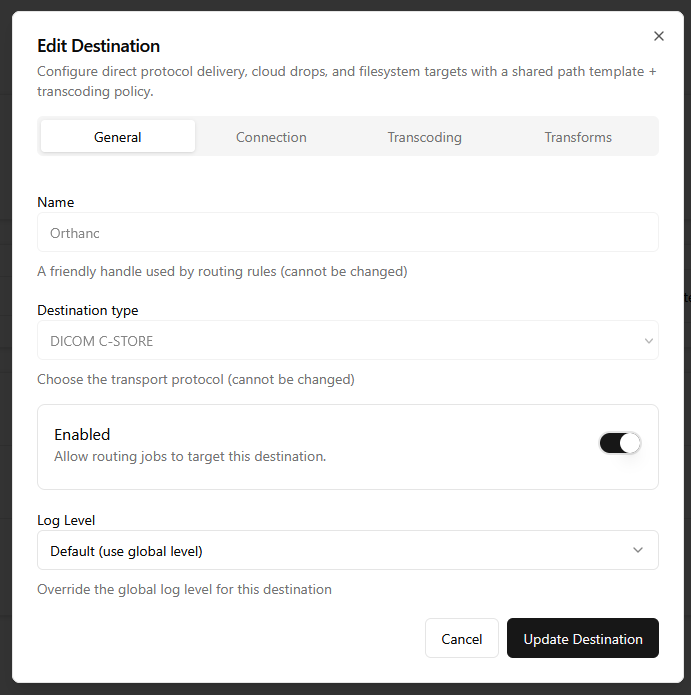
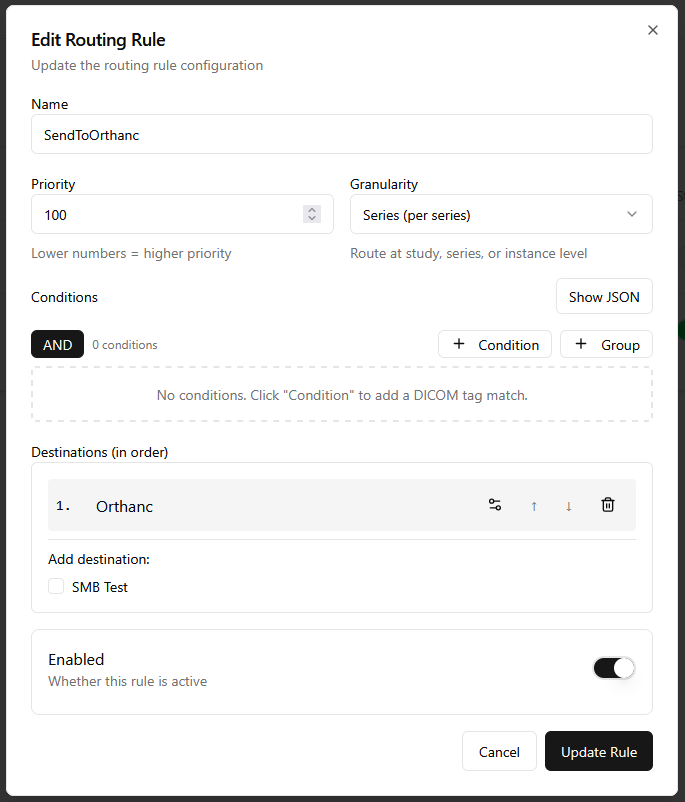
Rule-based routing with support for DICOM destinations as well as object storage, file shares, and webhook-style integrations.
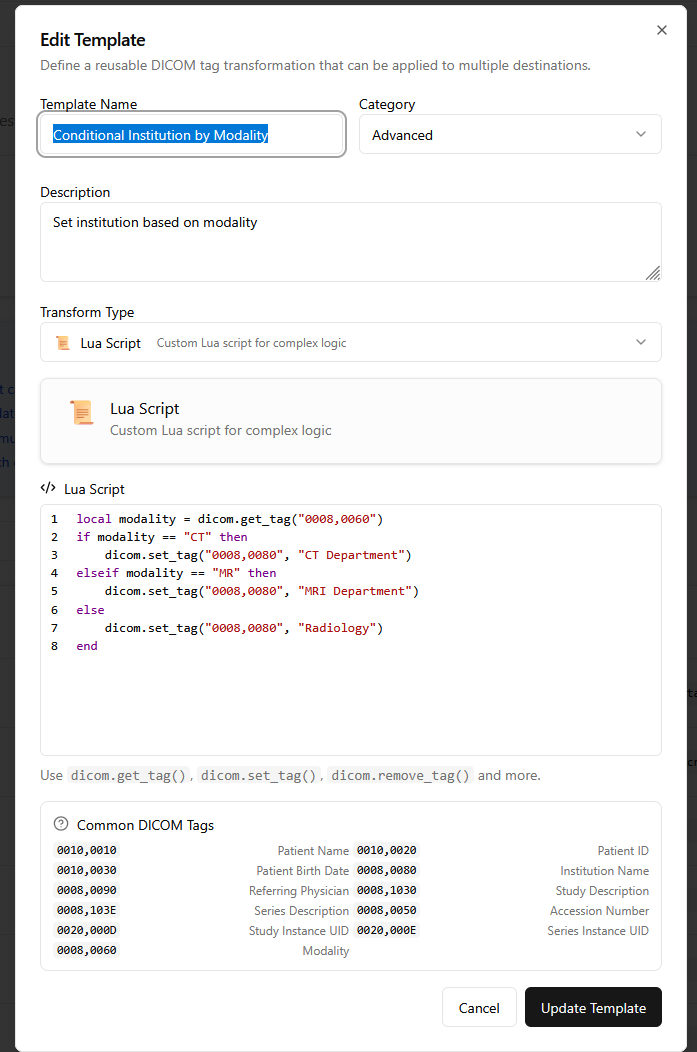
Optional header modification using Lua scripts to support workflows such as anonymization, enrichment, and normalization.
HL7 v2.x routing support with MLLP transport, optional Lua transforms, and configurable fan-out to multiple destinations.
MWL (SCP) functionality for serving worklist entries to modalities and integrating with upstream systems where applicable.
Configuration options for TLS, authentication, role-based access control, and encrypted credential storage.
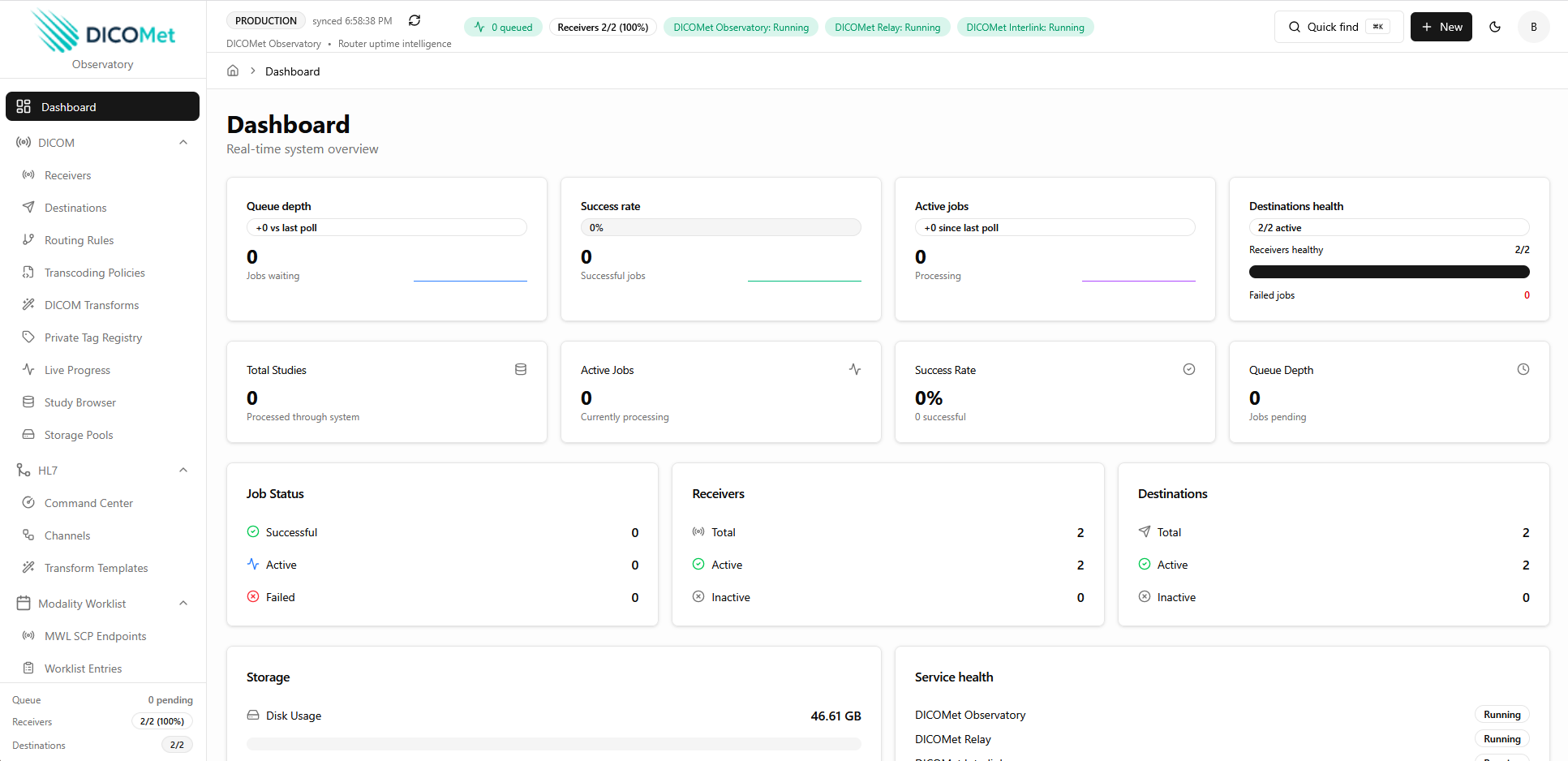
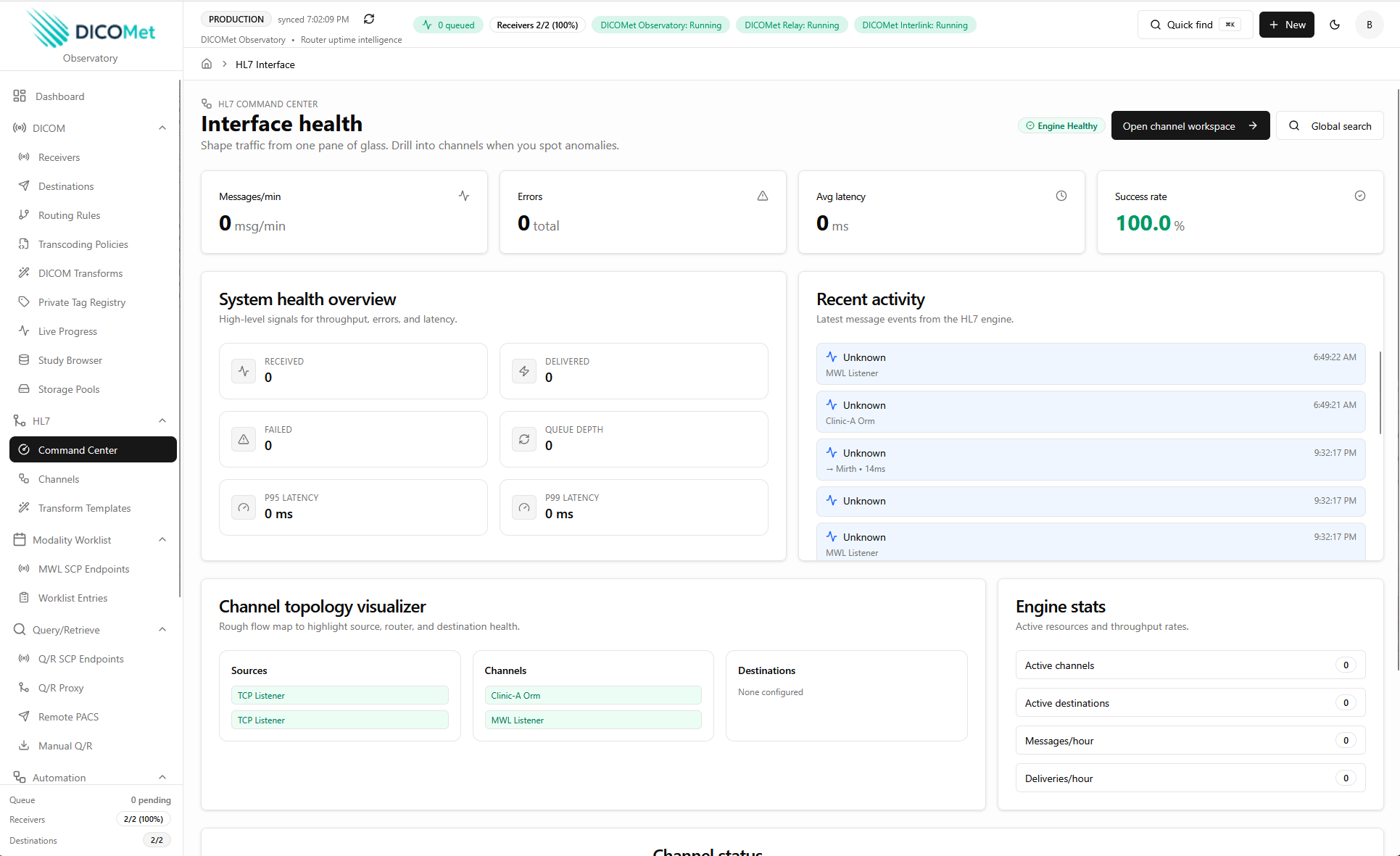
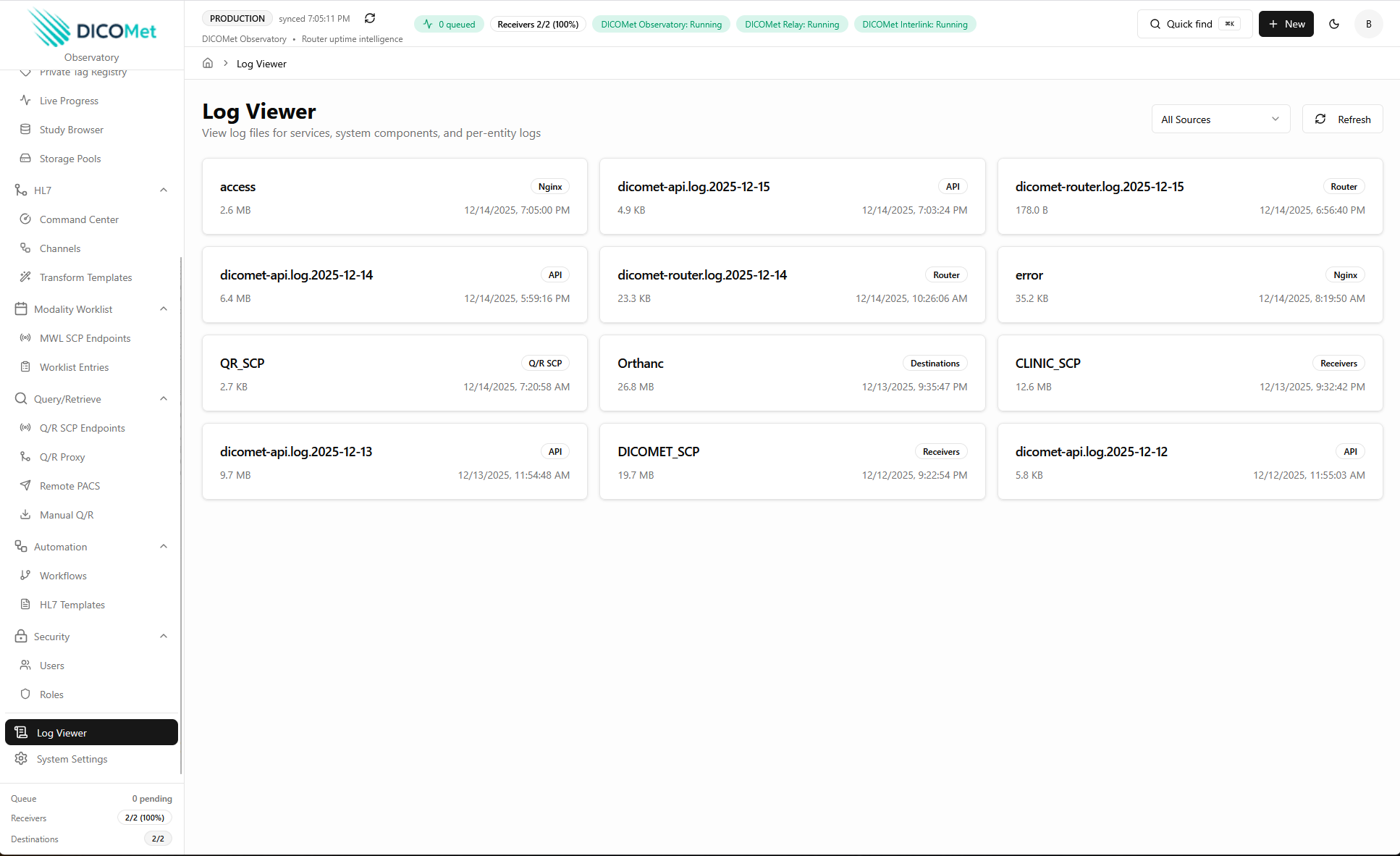
Dashboards and log views for inspecting routing activity, queue depth, service status, and destination behavior.
Policy controls for handling transfer syntaxes and conversions, including allow/deny and warning-style behavior where configured.
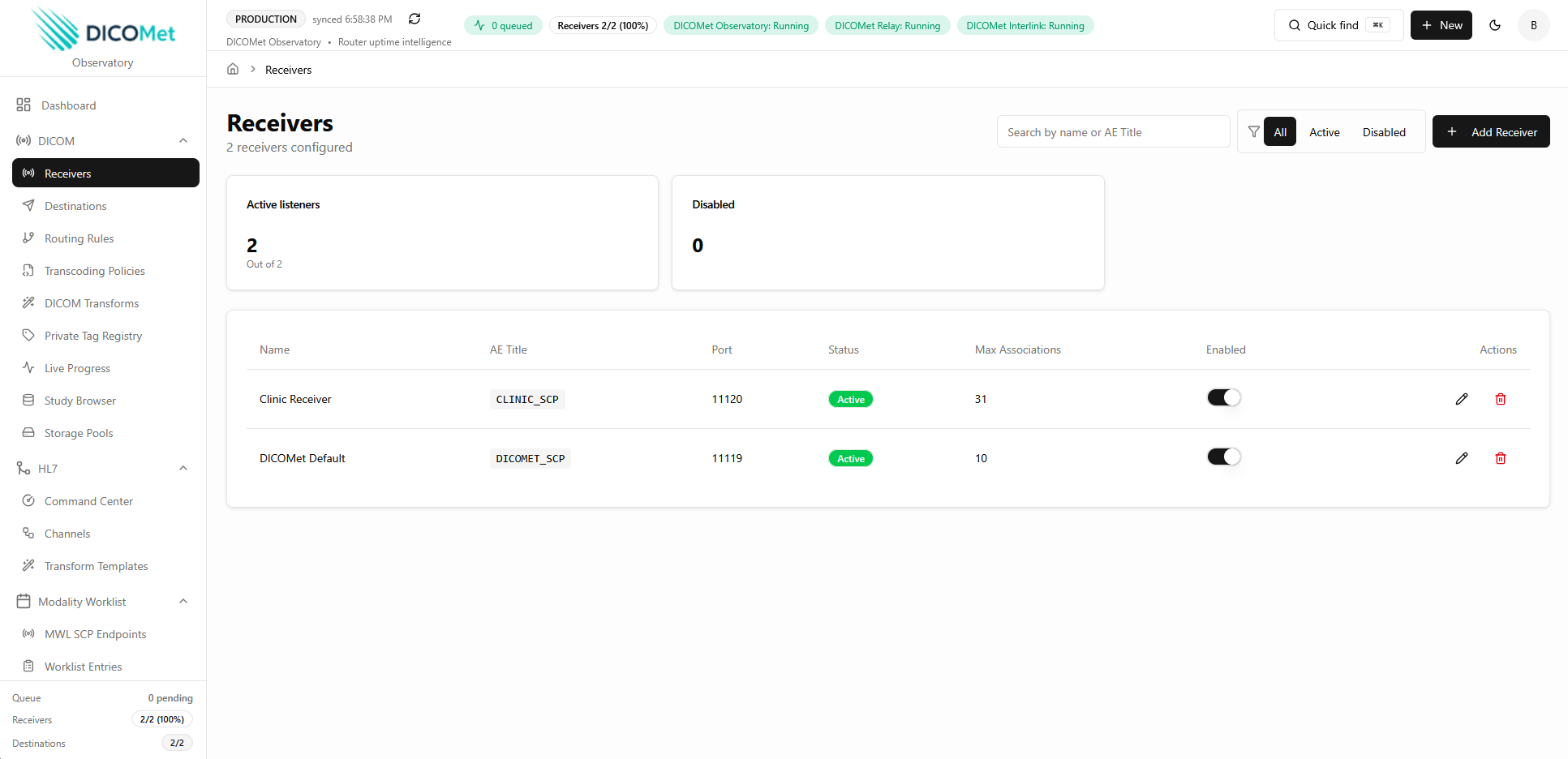
An interface for configuring routing, reviewing activity, and monitoring system status.
Review queue depth, job outcomes, active activity, and destination status. Service indicators help summarize the state of DICOMet components.
A component-based design for receiving, processing, and delivering imaging data.
From a turnkey appliance to a custom installation, DICOMet can be deployed in different environments.
Share a bit about your environment and routing needs, and we can walk through DICOMet’s capabilities.